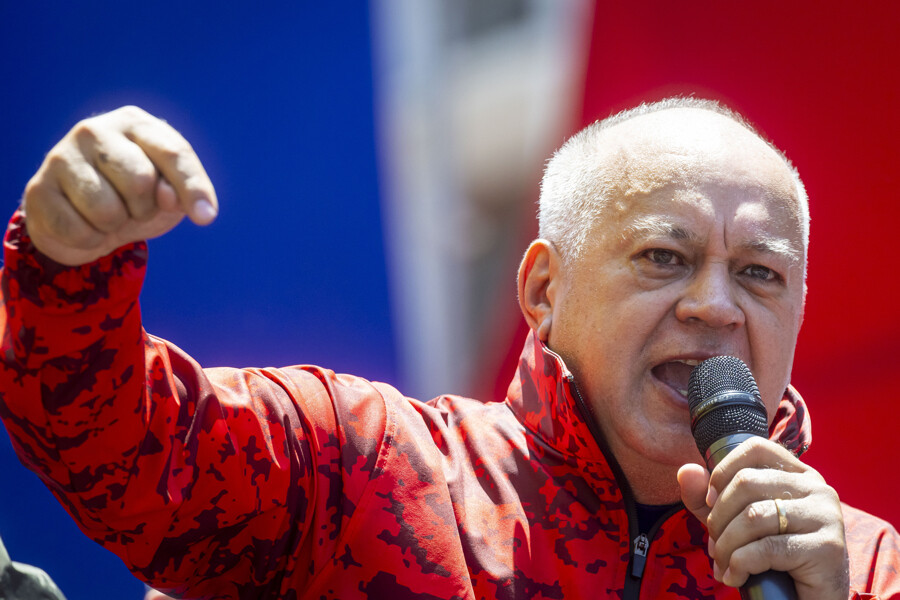
The federal judge overseeing the case against the ousted president of Venezuela, Nicolás Maduro, and his wife, Cilia Flores, prevented the defense from sharing case evidence with other co-defendants who have not yet been detained, such as Venezuelan Interior Minister Diosdado Cabello.
«Discovery material cannot be shared with any identified defendant who has not yet been detained in this proceeding, nor with the lawyers of said defendants,» assured Alvin Hellerstein, a federal judge for the Southern District of New York, in his response to the prosecution's request.
He added: «It is not necessary to share discovery material to prepare the defense».
Hellerstein accepted the prosecution's protective request from a few days ago, in which it alleged that a protective order over the entire set of evidence was necessary due to the «risks» it could pose to the safety of witnesses and the integrity of the investigation.
The purpose of this protection is to exclude the other three defendants who are not detained by U.S. justice, in addition to Cabello: Ramón Rodríguez Chacín, former Minister of the Interior; Nicolás Maduro Guerra, the former leader's son; and Hector Rusthenford Guerrero Flores, alias 'Niño Guerrero' and alleged leader of the criminal organization Tren de Aragua.
On March 26, Maduro and Flores appeared before U.S. justice for the second time in the context of their drug trafficking case, for which they have been in a Brooklyn prison since the beginning of the year when they were detained by U.S. forces.
In this session, the prosecution requested for the first time that information not be shared with co-defendants.
Hellerstein did not then respond to this request, nor to the U.S. sanctions on Venezuelan funds that, according to Maduro, prevent him from affording a defense.
The judge did reject dismissing the narcoterrorism charges against the couple, as their lawyers requested, and urged the parties to a prompt resolution of the financial issue.