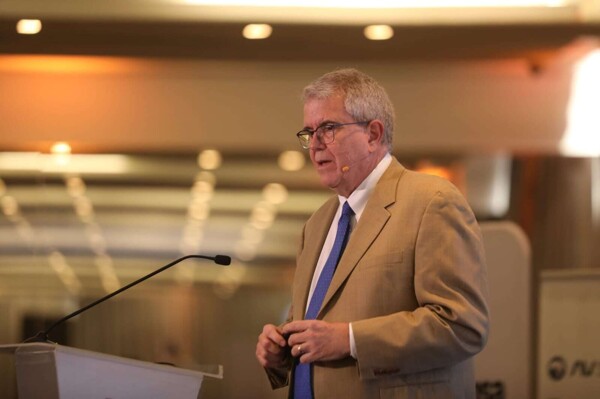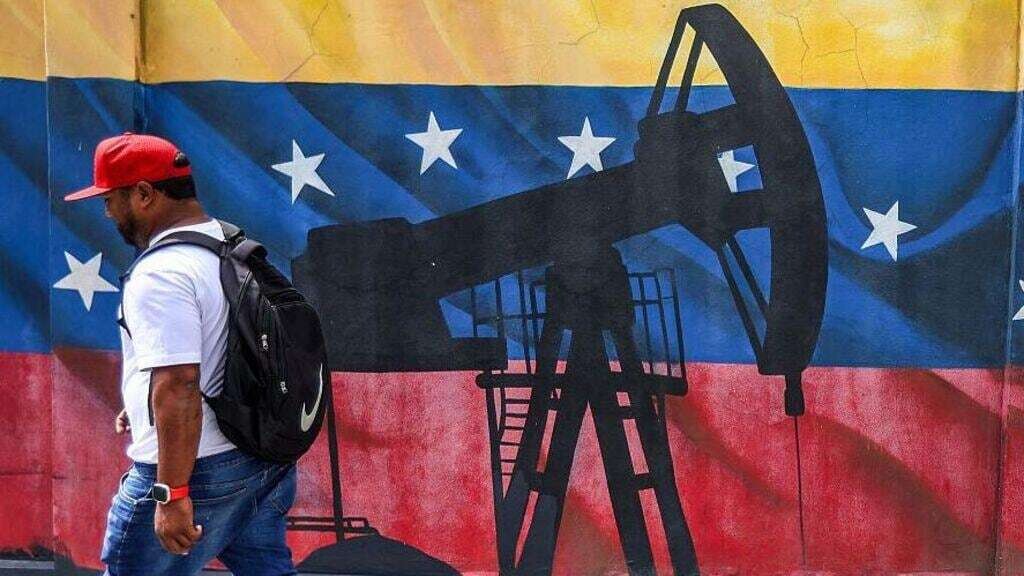
Analyst Eduardo Fortuny stated that companies not participating in the recovery of consumption in Venezuela risk losing market share in the region and strengthening their competitors. He said that even if the decision to invest is individual, competitive dynamics will force many companies to take the risk and enter Venezuela to not be left out of a potential economic recovery. «If you need perfect legal security to invest in Venezuela, probably when that security arrives, there will be no opportunity left,» he noted, adding that the current environment combines high risk with potentially significant returns. The analyst emphasized that the country is undergoing a structural transformation driven by external factors and economic decisions that are redefining its productive model. «This is an economy that is rebuilding from the private sector with massive capital investment,» he stated, while highlighting that strategic sectors are migrating to private participation schemes. «The strategic issue is not today's oil, it's access to the reserves,» he indicated, recalling that Venezuela has one of the largest reserves in the world, which positions it again on the international energy board. Even he claimed that «Venezuela alone, with a fraction of its oil, can cover the world's unmet demand in the coming years». Internally, the specialist described a change in the country's perception by its own population and the market. «This points to Venezuela becoming a petroleum economy with intense capital investment. This can lead to 10 years of sustained economic growth above two-digit figures, given the magnitude of the investment that has to be made here,» Fortuny expressed. The gold of the Central Bank is controlled by sanctions and the Bank of England. Eduardo Fortuny, an environment and market strategy analysis specialist, during the conversation on Venezuela's challenges, opportunities, and investment prospects, mentioned that: «We are now a country tutored by Washington… our international reserves and…». He mentioned that if any economic agent, that is, companies, entrepreneurs, or a person, wants to do business in Venezuela involving the movement of foreign currency, they must first obtain specific authorization from OFAC, the Office of Foreign Assets Control of the US Department of the Treasury. In this context, Fortuny warns that the attractiveness of Venezuela as an investment destination cannot be analyzed under traditional parameters. Part of these questions were answered in the conversation «Venezuela: challenges, opportunities, and investment prospects», organized by La Prensa with AV Securities and Hamilton Reserve Latam in a regional context marked by economic changes and new capital opportunities. Eduardo Fortuny, director of Fortuny y Asociados, former vice president of BNH Casa de Bolsa, and a specialist in high-performance portfolio management, in his conference exposed the socio-political and economic panorama in which the country finds itself after January 3, following the departure of Nicolás Maduro, and the beginning of the tutelage of the United States government, Donald Trump, over the «transitional» administration of Delcy Rodríguez. To begin answering all the questions, Fortuny first makes it clear: «we are a tutored country [Venezuela] at this moment». «If you don't like the obstacle course, don't look to Venezuela,» he said, emphasizing that the environment will continue to be marked by operational, regulatory, and political challenges. «Venezuela has gone from sharing problems to sharing hope,» he held, referring to the expectations of economic recovery, driven by a possible opening and greater flow of foreign investment in which there is a very high optimism. However, he also warned that the process will not be free of difficulties. All oil and mining export goes to accounts controlled by the Federal Reserve. Infrastructure and public services The need to rehabilitate electrical, water, telecommunications, and transportation systems represents one of the biggest investment opportunities, especially under private participation schemes. An expansion of credit, banking services, and corporate financing is expected in an economy based on private investment. Financial sector and banking The Venezuelan financial system presents a significant lag, which opens opportunities for accelerated growth. «The financial sector is going to grow 20 or 40 times because it is far below its natural size,» he stressed. Tourism and associated services The eventual return of the diaspora with more than 7 million Venezuelans abroad and the economic reactivation could dynamize tourism, both internal and international, generating opportunities in hospitality, transportation, and experiences. Fortuny launched a clear warning to those who still doubt whether to bet on the Venezuelan market: not participating also implies a risk. In this sense, he summarized the scenario with a key phrase: «the problem for some is the opportunity for others». In addition, he indicated that although many expected a change in the government administration, the reality is that according to Trump's plan for Venezuela, the priority is to first fix the economy and at some point that desired political transition will occur. «The reconstruction of Venezuela will be done by Venezuelans,» he indicates by pointing out that much talent that is still in that country and those abroad will arrive with this new panorama. Fortuny listed what he considers to be the eight key sectors to take advantage of to invest in Venezuela: 1. Real estate and real estate The real estate market faces an oversupply after the departure of millions of Venezuelans, but it also opens opportunities in rentals, space reconversion, and new developments adapted to a different demand. 2. Oil and gas: the axis of recovery The energy sector leads the investment opportunities, driven by the opening to private capital and the need to increase production. Sectors such as food, health, and basic products already show signs of recovery. 3. Oil services and auxiliary industry Beyond extraction, there is ample space for support companies: maintenance, spare parts, logistics, transportation, catering, and even basic services. The reactivation of the sector will require a complete network of suppliers. 4. Financial sector and banking The Venezuelan financial system presents a significant lag, which opens opportunities for accelerated growth. «The financial sector is going to grow 20 or 40 times because it is far below its natural size,» he stressed. 5. Logistics, ports, and transportation The increase in trade and investment will require modernizing ports, airports, and supply chains. «Ports and airports are going to get stuck; their capacities will have to be redone to return to normality,» he specified. 6. Commerce and mass consumption With a possible improvement in purchasing power and the return of migrants, internal consumption could experience a rebound. 7. Tourism and associated services The eventual return of the diaspora with more than 7 million Venezuelans abroad and the economic reactivation could dynamize tourism, both internal and international, generating opportunities in hospitality, transportation, and experiences. 8. Infrastructure and public services The need to rehabilitate electrical, water, telecommunications, and transportation systems represents one of the biggest investment opportunities, especially under private participation schemes. An expansion of credit, banking services, and corporate financing is expected in an economy based on private investment.