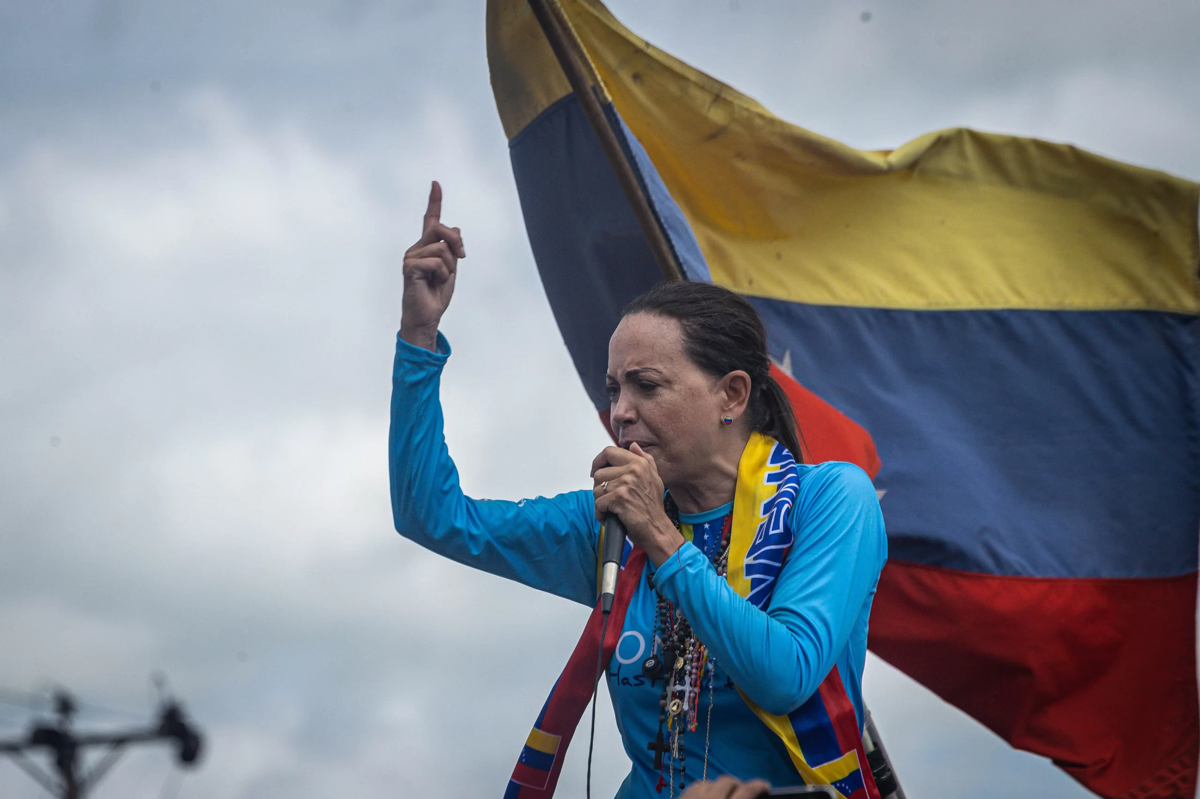
For the international community, the operation not only rescues a key figure at extreme risk; it also reconfigures the Venezuelan political axis at a time when chavismo faces growing isolation and internal fractures. What was a routine operation for Washington and a gesture amid bilateral tension for Caracas became the maneuver that allowed opposition leader María Corina Machado to finally leave the underground, preserve her life, and present herself to the world as a symbol of democratic resistance. As TNA reconstructed from diplomatic and intelligence sources consulted under strict confidentiality, the operation was designed with surgical precision. Machado had managed to evade one of the densest counterintelligence systems on the continent. In parallel, Edmundo González Urrutia, the opposition-recognized elected president and exiled in Spain, traveled to Norway to participate in a ceremony that promises to leave a mark on recent Venezuelan history: after the Nobel Prize ceremony, he is expected to take a symbolic oath before Latin American and European leaders, issue decrees, and consolidate an international legitimacy structure that openly challenges the continuity of the chavist regime. The scene awaiting in Oslo, with Machado free after months of invisible confinement and González Urrutia acting as a legitimate president, sets up a completely unprecedented board. The opposition leader had been declared a 'priority political target' by hardline chavist sectors; her survival depended on an exit that combined secrecy, international protection, and operational disinformation. While the Nicolás Maduro regime celebrated the reception of the deportees—a gesture that allowed it to suggest a functional dialogue with the United States despite the airspace closure decreed by Washington—a second movement was executed in silence within the same airport device. Under diplomatic cover and with documentation issued in extreme secrecy, Machado boarded the return flight, hiding her identity from the eyes of Venezuelan, Cuban, and Russian intelligence services, who until the last moment assumed she remained hidden inside Venezuela. The maneuver, explain consulted specialists, is a milestone due to its impact: it not only allowed Machado to leave a high-risk personal environment—after months in the underground, moving between improvised shelters while the regime tightened the noose—but it also enabled her arrival in Europe to receive the Nobel Peace Prize. That is why TNA is now publishing this article. That announcement caught the Venezuelan official apparatus off guard, which until then had maintained contradictory versions of her whereabouts: from insinuations of escape through clandestine passages to the narrative that she was still in Venezuelan territory under surveillance. Caracas, December 10, 2025-Total News Agency-TNA-The nighttime takeoff of the Eastern Airlines plane, authorized to transport a new group of deportees from the United States, ended up becoming one of the most audacious and decisive intelligence episodes of the contemporary Venezuelan crisis. That corridor, finally, opened that day. The public confirmation of her presence in Oslo, issued by the Norwegian Nobel Institute, sealed the success of the operation. None of that had been true. 'We spoke with her last night and she told us she will be in Oslo,' declared Erik Aasheim, a spokesperson for the institute.