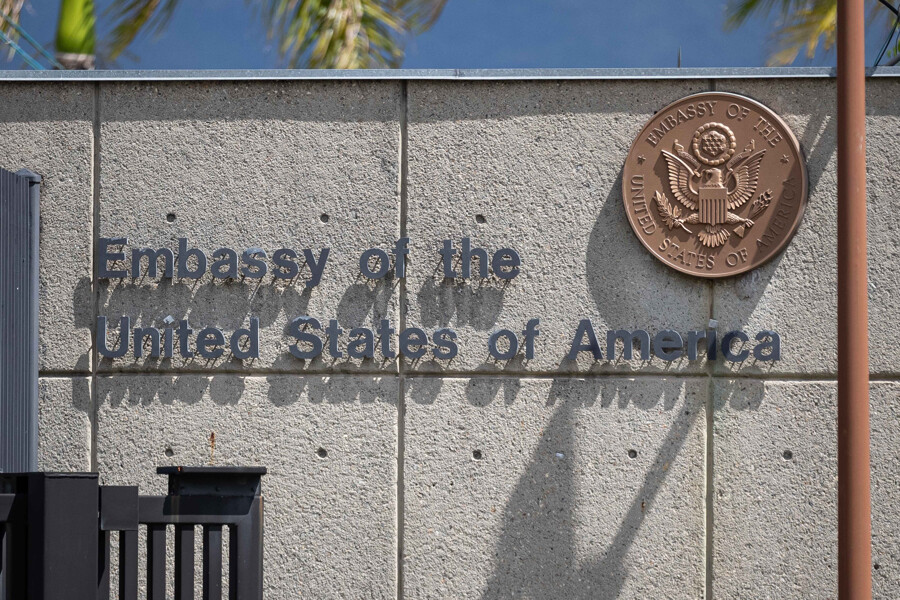
Caracas and Washington have once again expressed their willingness to dialogue, this time amid the deployment of U.S. military forces in the Caribbean waters near Venezuela, which has heightened tension between these countries, which have accumulated more than two decades of disagreements and nearly seven years without diplomatic relations, broken off in January 2019.
In recent years, Miraflores and the White House have had several contacts, some with the Venezuelan opposition involved, with results, mostly, in favor of the interests of each country. Below are seven episodes of the intermittent contacts and their outcomes:
Energy Security In March 2022, amid an escalation in oil prices due to Russia's invasion of Ukraine, a delegation from then-President Joe Biden visited Venezuela to discuss energy security and the release of six former Citgo executives—U.S.-based subsidiary of state-owned Pdvsa—who had been detained since 2017.
As a result of what the White House called the highest-ranking trip to Caracas in over two decades, Cuban-American Jorge Alberto Fernández, detained in 2021, and former Citgo official Gustavo Adolfo Cárdenas were released. That same month, Caracas stated that during 2023, it had conducted «negotiations with representatives of Washington and with the different oppositions of Venezuela» with the aim of «healing the social wounds caused by the illegitimate economic aggression».
Lifting of Sanctions In October 2023, both sides signed an agreement on migration to carry out «orderly, safe, and legal» repatriation flights of Venezuelans from the U.S., the Maduro government reported at the time. In a statement, it noted that the agreement was reached after several «sustained conversations» with U.S. authorities.
In December 2023, the U.S. announced a six-month lifting of sanctions after the Maduro government and the opposition Unitary Platform signed an agreement in Barbados on guarantees for the 2024 presidential elections. Washington later clarified that it made no concessions and continued not to recognize Nicolás Maduro as «the leader of Venezuela».
Prisoner Swap In June 2022, Maduro reported the visit of an «important delegation» from the U.S., which led to the release of two nephews of Maduro's wife, Cilia Flores, convicted in December 2017 in a New York court to 18 years in prison for drug trafficking, in exchange for the release of seven prisoners in Venezuela, including five former Citgo executives and retired Marine Matthew Heath.
Chevron's Return In 2022, Washington announced it would lift some of its sanctions on Venezuela, including the prohibition on Chevron from negotiating with Pdvsa, to try to reactivate the dialogue in Mexico between the opposition and chavismo, suspended in October 2021 by Caracas' decision after the extradition to the U.S. of Colombian businessman Alex Saab, a close collaborator of Maduro.
The Freedom of Saab In December 2023, the U.S. handed over Alex Saab to Caracas, who faced federal charges for allegedly laundering up to $350 million in fraud, in exchange for the release of ten Americans and two dozen Venezuelan political prisoners. According to Maduro, who greeted Saab with hugs, Qatar was the facilitator between Caracas and Washington.
Orderly, Safe, and Legal Repatriation In October 2023, both countries signed an agreement on migration to carry out «orderly, safe, and legal» repatriation flights of Venezuelans from the U.S., the Maduro government reported at the time. In a statement, it noted that the agreement was reached after several «sustained conversations» with U.S. authorities.
Reception of Deportees Shortly after Donald Trump's return to the White House in January last year, Caracas and Washington signed an agreement for Venezuela to receive deported migrants, which has remained despite growing tensions due to the presence of U.S. military forces in the Caribbean. The agreement was finalized during a visit to Caracas by Richard Grenell—Trump's special envoy—after which six American citizens detained in Venezuela were also released. Last July, Venezuela released another ten Americans in exchange for the return of 252 Venezuelans imprisoned in El Salvador.