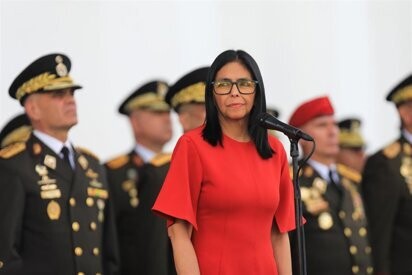
The conclusion is uncomfortable but hard to avoid: the Venezuelan problem was not exhausted by a single presidential figure, but was rooted in a much deeper power structure. That is why, although the statement by Turk once again places the issue on the international agenda, for many victims it comes after years of reports of torture, disappearances, lack of communication, and armed conflicts. He also demanded the immediate and unconditional release of all persons arbitrarily detained and warned that structural and systemic problems in the field of human rights persist. The Venezuelan administration claimed to have released thousands of people, but the UN was only able to verify a much smaller portion of those releases, and in several cases under restrictive conditions, which fuels doubts about the real transparency of the process. The situation becomes even more delicate because the number of political prisoners remains high. Foro Penin reported that at least 508 people continue to be deprived of liberty for political reasons, including civilians, military personnel, foreigners, and even a minor. And on that point, the UN, albeit belatedly, admitted that the debt remains intact. Sources: Office of the United Nations High Commissioner for Human Rights on the update of Volker Turk's reports and complaints about torture in Rodeo 1 and Fuerte Guaicaipuro; Foro Penin and reports on 508 political prisoners still detained in Venezuela; Reuters and the International Independent Mission to Establish Facts on the persistence of the repressive apparatus and at least 87 new political detentions since January 3; reports on the amnesty, releases verified by the UN, and the lack of complete official lists. The warning was especially significant because it exposed the gap between the official discourse of normalization and the reality still faced by political prisoners, their families, and opponents. The message from the High Commissioner also impacted a narrative that the interim government of Delcy Rodriguez has been trying to install since January, based on a supposed gradual opening accompanied by an amnesty law. The concern expressed from Geneva carries institutional weight, but also shows the limits of an international community that for too long accumulated reports, verbal condemnations, and exhortations without managing to break the functioning of a system that turned persecution into a method of political control. The demand for greater transparency, unrestricted access to detention centers, and the publication of official lists of released persons shows that distrust remains total. However, that norm was questioned by humanitarian organizations, which consider it insufficient, selective, and applied with great discretion. In Venezuela, where every gesture of coexists with new reports of abuses, the real test does not lie in the announcements of power, but in the effective disappearance of torture, the full release of arbitrarily detained persons, and the real dismantling of the repressive architecture. According to that mission, since January 3, at least 87 new political detentions have been recorded, a clear sign that the old practices of silencing and persecution remain in force.