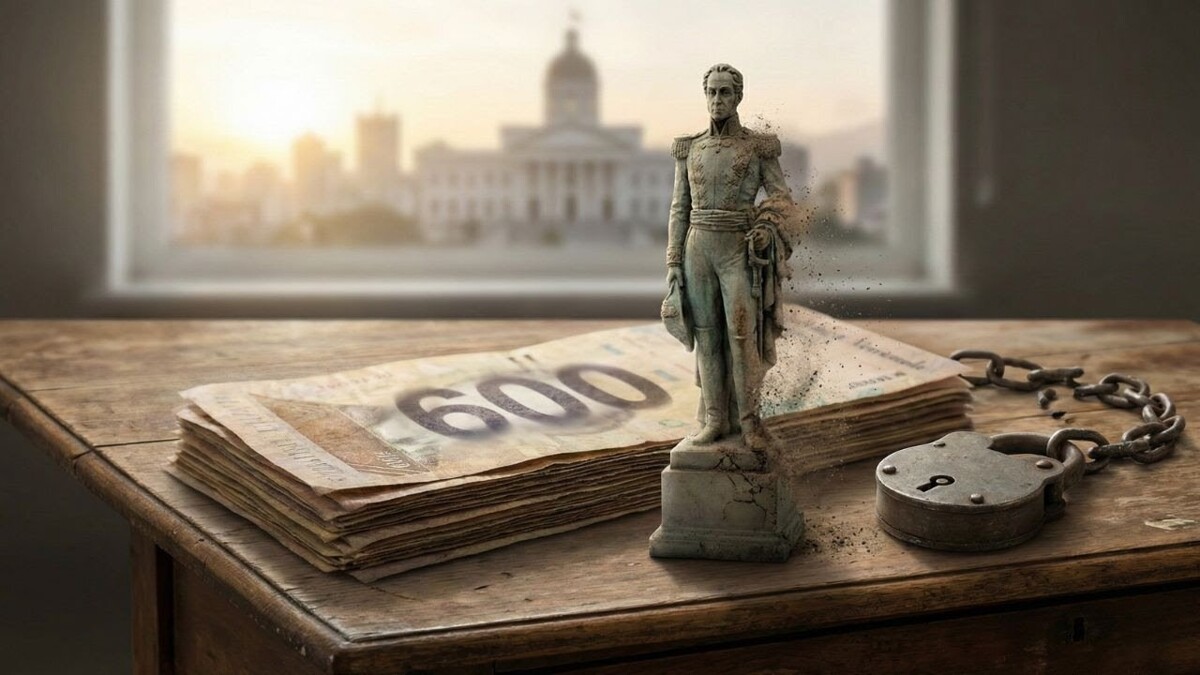
Keeping, transferring, or selling them has very different effects on expectations, liquidity, and volatility, analyzed Matías Bari, CEO of Satoshi Tango. Where did Venezuela get its BTC? The key point is: if Venezuela had a significant reserve of BTC, the market would need to know by which of these paths it got there. “The origin defines the legal, regulatory, and reputational treatment of the asset,” clarified the executive. If the funds come from illicit activities — drug trafficking, corruption, money laundering — the trail does not disappear: it can be analyzed, tracked, linked to addresses, exchanges, and entry or exit points to the financial system. In many cases, digital assets are even easier to audit than cash or traditional offshore structures. How to identify them From this perspective, the correct question would be how they are identified, frozen, and managed under AML and compliance frameworks. Bitcoin introduces a historical novelty: for the first time, a potentially sovereign reserve can be audited by anyone in real time, if the State decides to show it. There are no hidden ingots or opaque vaults: there are only addresses, movements, and public records. States are beginning to coexist with Bitcoin as an asset: some buy it, others mine it, and others seize it. But all face the same challenge: how to integrate it into reserve schemes without losing governance, transparency, or credibility. There are at least three clear models: -Reserves by economic policy decision. The best-known case is El Salvador, which incorporated Bitcoin as part of its national strategy. Venezuela, February 27 (NA) – The detention of the ousted president Nicolás Maduro and the transition accepted by Donald Trump that Vice President Delcy Rodríguez would govern raises a question for the global crypto ecosystem: what would happen to the supposed 600,000 bitcoins that some point to as a “reserve” of Venezuela if a sudden change of regime were to occur? If they existed and were controllable, it would open three possible paths for those BTC: keep them as a strategic reserve, in the style of other countries that today consider Bitcoin an alternative asset; transfer them to institutional custody and define a transparent management policy; or liquidate them partially or totally, through auctions or the market, with a direct impact on prices and expectations, highlighted Agencia Noticias Argentinas among the speculation on the matter. In all cases, the inescapable prerequisite is effective control of the private keys. To gauge the impact, it must be taken into account that 600,000 BTC represent about 2.9% of Bitcoin's maximum supply, a volume capable of generating a supply shock if the market interprets that those funds could be liquidated, auctioned, or moved from custody. “In crypto, prices react less to speeches than to operational probabilities. In these cases, BTC functions almost like an energy by-product: it turns surpluses into a liquid and global asset. IP -Reserves from seizures and confiscations. The United States, the United Kingdom, and other countries concentrate large volumes of Bitcoin not because they bought it, but because they seized it in cases linked to financial crimes, hacks, or money laundering. Over time, the debate stopped being ideological and became technical: custody, transparency, risk management, and market communication. -Reserves from state-linked mining. Countries like Bhutan have appeared on the global radar for accumulating Bitcoin from mining with hydroelectric power. They are “involuntary” reserves, but absolutely real, and today they are part of public treasury decisions. #AgenciaNA The question is not ‘who governs’, but what happens to the keys, who controls the funds, and what is their destiny.