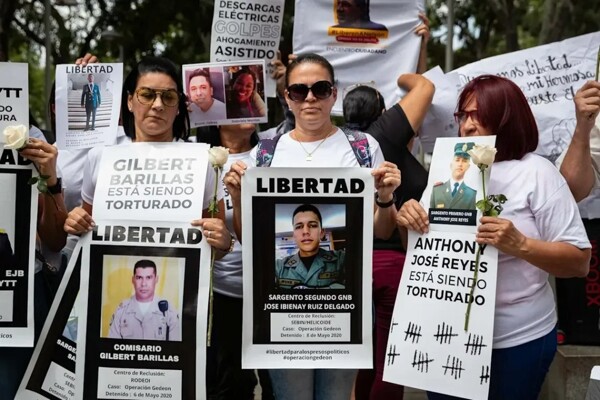
The Venezuelan criminal organization known as Tren de Aragua (TdA) intensified its presence in the Western Hemisphere during 2025, consolidating itself as one of the most aggressive and adaptable criminal networks in Latin America.
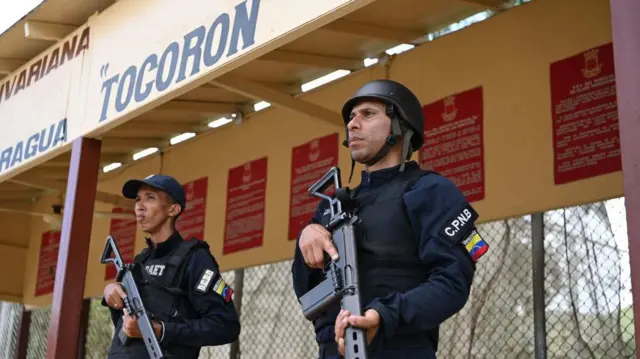
Originating from the bowels of the Tocorón prison, this gang has transcended its prison roots to become a transnational actor that combines extreme violence, human trafficking, and ties to authoritarian regimes, challenging the stability of multiple nations. In 2025, its footprint has deepened in the United States, where federal agencies link it to sex trafficking operations in Texas and extraditions to Chile for homicides.
In Argentina, designated as a terrorist organization in March 2025, the TdA controls neighborhoods in Buenos Aires dedicated to forced prostitution, according to local intelligence reports. The Venezuelan migration crisis, with over 7.9 million displaced people since 2018 according to the IOM, serves as the main vector.
Today, it operates in at least 12 countries, from the Caribbean to the Southern Cone, controlling migration routes, illegal mining, and human trafficking. Experts in security highlight the TdA's flexibility as its greatest strength. Its 'exoskeletal' structure – without a visible central command – exploits institutional gaps in nations with weak states, such as Peru and Ecuador, where it has unleashed waves of urban violence.
In Ecuador, where the group contributed to the 2024 prison crisis, its influence persists in prisons like Litoral, with riots leaving dozens dead. In Brazil, the police of Roraima reported in 2025 at least 15 dismemberment homicides attributed to the group, a pattern of terror designed to intimidate entire communities.
In Colombia, recent arrests of 19 members for drug trafficking and extortion illustrate this tactic. A report by Semana in Colombia revealed in September 2025 an attack on exiled opponents in Bogotá, orchestrated by Diosdado Cabello via the TdA, confirming its role in cross-border persecution.
The regional response has escalated. Countries like Peru and Trinidad and Tobago classify it as a terrorist organization, enabling shared intelligence tools. This designation marks a turning point: it allows for asset freezes and rapid extraditions, but also exposes limitations.
On November 14, the United States extradited three alleged TdA members to Chile for kidnappings and murders in Antofagasta, where the group operates illegal mines. In Texas, a federal raid in San Antonio on November 17 dismantled a sex trafficking ring linked to the TdA, arresting 140 migrants and capturing Venezuelan leaders.
The FBI and HSI announced that same week a task force in southern Texas against transnational cartels, with a focus on the TdA. In Chile, where 2025 saw a surge in homicides attributed to the group, the government of Gabriel Boric promoted joint operations with Interpol.
In Peru, the murder of sex workers in Lima in October 2025 was interpreted as a territorial claim over the sex trade, according to Ángela Villón, leader of the Sex Workers Movement.
In 2025, ties with Nicolás Maduro's regime have gained new relevance. This alliance facilitates money laundering and control of air routes from Venezuela to Central America. 'The TdA recruits among vulnerable migrants, extorting them and using them as mules for drugs or trafficking victims,' details Carlos Augusto Chacón, director of the Hernán Echavarría Olózaga Institute of Political Science.
Chacón describes this as 'asymmetric warfare': the TdA acts as a proxy to destabilize neighbors, with the support of Russia, China, and Iran.
'The TdA operates as a franchise: local cells adopt its brand in exchange for tributes, allowing for autonomy and rapid adaptation,' explains Douglas Farah, president of IBI Consultants. 'Without hemispheric cooperation, the TdA will continue to mutate,' asserts Chacón.
However, corruption in Venezuela – where Tocorón reopened in 2024 without reforms – perpetuates the cycle. The rise of the TdA illustrates a new era of organized crime: not only lucrative, but instrumental for political agendas.
Experts in security highlight the TdA's flexibility as its greatest strength. 'It is an existential threat to fragile democracies, mixing drug trafficking with hybrid terrorism,' concludes Farah. 'They use violence not only to gain territory, but to erode trust in the State,' warns Farah.
U.S. intelligence reports, such as the one from the Department of State on November 16, designate the Cartel of the Suns – the narcotic wing of chavismo – as a terrorist organization, explicitly linked to the TdA and the Sinaloa Cartel.
As Latin America faces elections and economic crises in 2026, containing this 'red wave' will require more than raids: a unified strategy against its authoritarian roots.