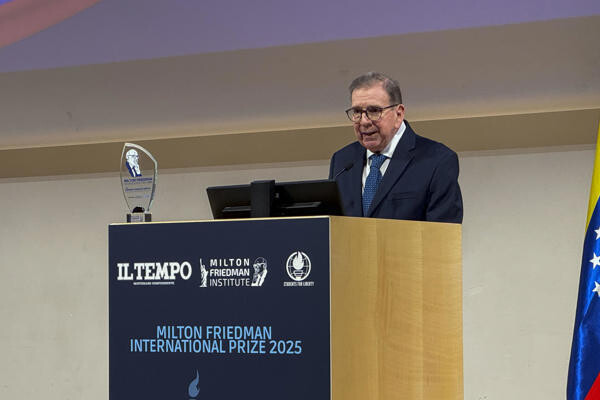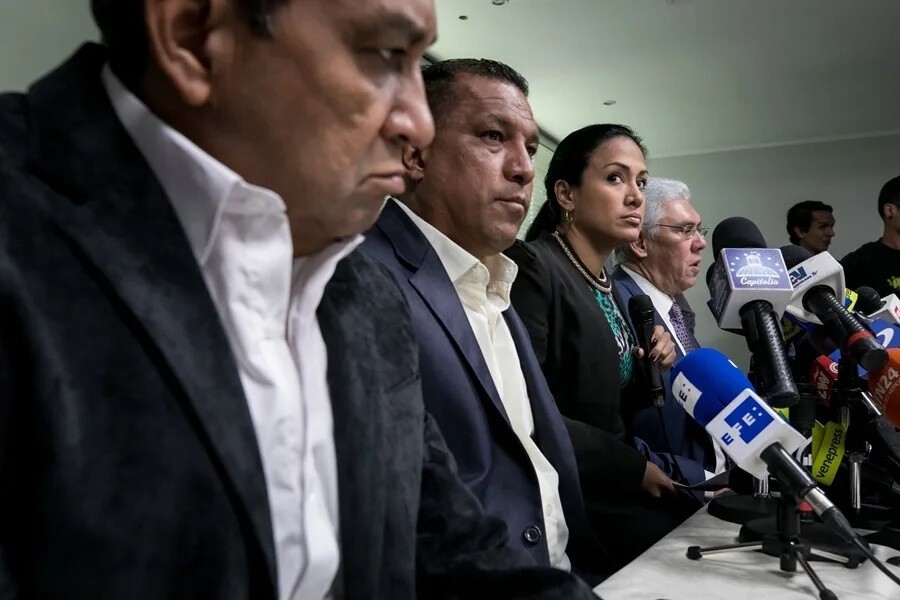
In Venezuela amid rejection of the opposition's death. However, opposition leaders María Corina Machado and Edmundo González Urrutia warned yesterday that Díaz's death reveals a 'sustained pattern of state repression' and denounced that there are already seven political prisoners who have died in prison following the presidential elections of July 28, 2024. Machado and González Urrutia emphasized that their integrity and life were the 'exclusive responsibility of those who arbitrarily held him captive' at El Helicoide, as the headquarters of the Bolivarian National Intelligence Service (Sebin) in Caracas is known, and dismissed that his death was 'common'. The Ministry for Penitentiary Services of Venezuela reported that the former governor of Nueva Esparta state died from a heart attack, as previously reported by several NGOs and political parties. Tension between the U.S. and Venezuela occurs at a moment of maximum tension due to a possible U.S. action against Venezuela following its military deployment near the country in the Caribbean Sea, under the argument of combating drug trafficking, something that Caracas sees as a 'threat' seeking to provoke a government change. The U.S. denounced the 'vile nature of the criminal regime' of Nicolás Maduro in Venezuela after the death of former governor Alfredo Díaz, considered a political prisoner by the opposition, and also decried the conditions of his detention. 'The death of Venezuelan political prisoner Alfredo Díaz, arbitrarily detained in Maduro's torture center at El Helicoide, is another reminder of the vile nature of Maduro's criminal regime,' said the Bureau of Western Hemisphere Affairs in X. The U.S. declaration denounces the vile nature of Maduro's regime over the death of a former governor. Díaz, an activist for the opposition party Democratic Action and also a former councilman and mayor, was detained in November 2024, in a context of political crisis after the presidential elections that year, in which the largest opposition coalition denounced as fraudulent the result that gave Maduro re-election. The deceased politician questioned the lack of publication of the detailed results of the presidential elections and denounced, days before his detention, the electricity crisis that Nueva Esparta state experienced in November, which the Government attributed to opposition attacks. NGO: Maduro's government will have to answer for 25 deaths in custody since 2015. The Venezuelan Prison Observatory (OVP) NGO stated this Sunday that the government of Nicolás Maduro will have to answer before Justice for the 25 deaths it has recorded since 2015 under state custody, following the death this Saturday of political prisoner and former opposition governor Alfredo Díaz. 'In 26 years the regime has turned prisons into torture centers, where its policy is to subject deprived of liberty to cruel, degrading and inhuman treatment, prolonged isolation, without access to a private defense and null medical attention,' the organization assured in its X account. Therefore, it emphasized that Maduro's government is 'responsible for these deaths' and defended that the people who died were detained 'arbitrarily'. 'From the OVP we ask ourselves: In what government did so many political prisoners die under state custody?', the NGO concluded. The U.S. government.