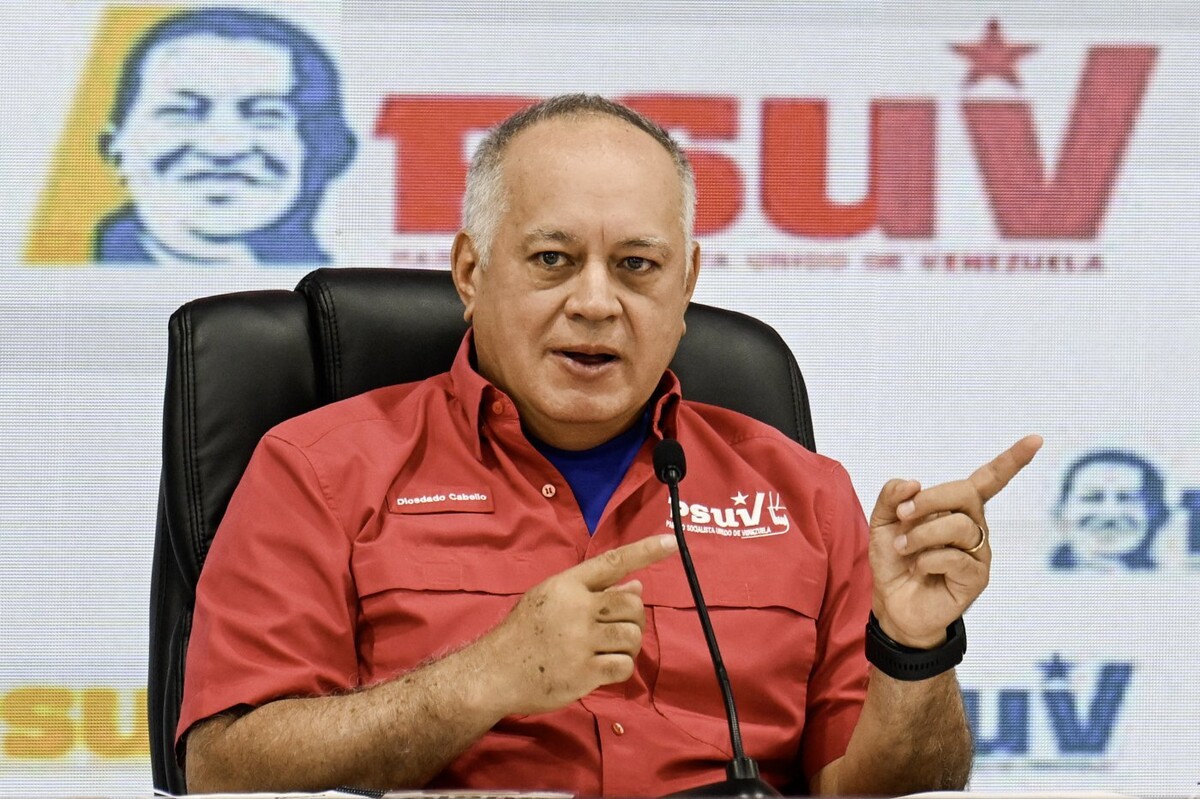
The recent statements by Diosdado Cabello and Nicolás Maduro have revealed an unusual level of tension and nervousness within the Venezuelan regime, which responded with disproportionate threats to the remarks made by U.S. Secretary of State Marco Rubio. The reiteration of the concept of 'annihilation' towards a potential aggressor showed an attempt to elevate the political cost of a possible intervention, although at the same time it revealed a sense of vulnerability within the chavist apparatus. Three days earlier, Nicolás Maduro had adopted a similar tone, appealing to resistance, sacrifice, and the threat of a supposed defense 'to the last consequences.' In regional diplomatic circles and in security analyses consulted by Total News Agency, the coincidence in tone between Maduro and Cabello is interpreted as a symptom: the regime fears that strategic changes in Washington will alter international pressure and affect its political and military maneuverability. Far from exhibiting strength, the tone chosen by both leaders exudes concern about the possibility of an adverse scenario that would expose them to increasing international pressure. During the so-called 'march of the flag and the sword of the Liberator' in Caracas, Cabello launched direct attacks on Rubio, asserting that 'the delusions of a conqueror will be shattered' and warning that any foreign force entering Venezuelan territory 'will be stopped by any means possible.' However, the need to repeatedly emphasize that Venezuelan territory 'is respected' made it clear that the message was not only aimed at the United States but also at its domestic audience, at a time when political and economic tensions are intensifying. The Venezuelan regime, aligned in a narrative of permanent confrontation, continues to raise the tone in every statement. The constant highlighting of a possible 'intervention' functions as a defensive and mobilizing narrative towards the chavist base, but it also exposes the nervousness of a structure facing regional isolation, deep institutional deterioration, and growing social discontent. Cabello insisted that any aggression would be faced by 'the people' and not just by the security forces, a formulation that chavism has historically used to reinforce its narrative of popular resistance. His words, more than a message of control, reflected a marked need for reaffirmation internally in a context of political and military fragility. The leader of the United Socialist Party of Venezuela (PSUV) insisted that the country's sovereignty is 'well-protected,' but he accompanied the assertion with a series of warnings that showed tension rather than security. Cabello emphasized that any territorial violation would trigger an immediate response: 'Whoever sets foot on our territory enters a forbidden zone for them, and we will defend ourselves with whatever we have.' But the form, volume, and intensity of these recent warnings evidence more unease than strength, and they configure a scenario in which Caracas is trying to show power while dealing with the growing fear of a geopolitical realignment that could alter the balance that has sustained chavism for more than two decades.