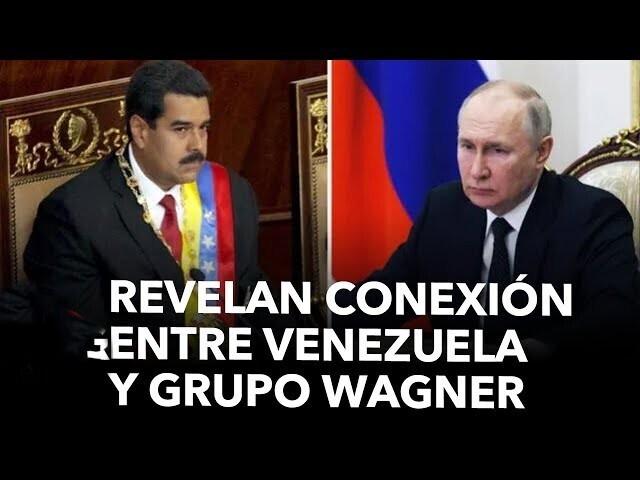
Venezuela, Caracas — A version of President Nicolás Maduro's surrender plan is circulating in parallel with reports of military pressure in the Caribbean against drug trafficking networks and growing internal tension within the Chavist command structure, factors that are accelerating the political timeline in Caracas. According to Ruckauf, the 'surrender plan' not only included the handover of institutional control but also judicial protection and the withdrawal of existing rewards for his capture. As revealed by former Argentine Vice President Carlos Ruckauf in a recent interview, the Venezuelan leader reportedly sounded out his exit from power under specific conditions — the annulment of the arrest warrant against him and guarantees of exile — but the United States is said to have rejected the proposal. In this complex scenario, any late attempt at negotiation looks increasingly costly for the president himself and less attractive to his international interlocutors. The question, then, is no longer just whether Maduro will leave power, but in what format: a deal that grants him immunity, a negotiated displacement with minimal guarantees, or an arrest without concessions. In summary, the map drawn by the interview outlines a fast-moving and volatile endgame: a president who reportedly tested the waters for a conditional surrender; a White House reluctant to drop the charges; the shadow of a Russian para-state actor as a possible executor of a detention; an opposition galvanized around María Corina Machado; and a Chavist structure corroded by distrust. The mere mention that elements of that organization could already be on Venezuelan territory — a possibility long suggested in regional security circles with varying degrees of verification — adds an external and opaque component to the board: a low-diplomatic-footprint detention operation designed to minimize any backlash from the Bolivarian National Armed Forces. It should be recalled that the Wagner Group is Russian, which heightens the level of paranoia, comparable to a giant microwave oven enveloping the regime and cooking it from within. The strategic backdrop framing these versions is completed by the U.S. naval and air operations in the Caribbean against cocaine and fentanyl corridors, presented in the interview with interdiction statistics and vessel sinking figures, and with references to 'kinetic operations' without own casualties. In Washington, key congressional committees are said to have been closely monitoring these developments, suggesting that any further step—whether an increase in pressure or a more direct move—is backed by prior political consideration. The U.S. refusal—according to the interpretation spread in the interview—has, for now, closed a negotiated exit route for the president and exacerbated distrust in his inner circle. If Maduro can no longer trust the Russian mercenaries sent by Putin, it is difficult for him to trust anyone. The opposition leader, mentioned by the former vice president as a figure who 'speaks from the ground' about an imminent change, capitalizes on the climate of social fatigue and the cracks within Chavism. The emergence of alternative leadership and signals of desertion among mid-level state officials—two trends analysts have been pointing out—feed the perception that the transition is no longer a conjecture but a window that could open abruptly, said Ruckauf. Ruckauf also outlines three vectors that, combined, would put Maduro against the ropes: U.S. external pressure, the real risk of an 'extraction'—with or without direct Washington involvement—and internal betrayal. The presence of 'extraction' capabilities in the region, emphasized in the interview by Ruckauf, is interpreted as a message of preparation for scenarios of rapid execution. On the domestic Venezuelan front, the wear and tear of the official apparatus contrasts with the projection of María Corina Machado. In that context, the interview explicitly mentions the Wagner Group as a possible outsourced arm for that task. To this uncertainty are added cross-threats and suspicions of internal betrayries that, in Ruckauf's analysis, make Maduro both a toxic asset and a risk for those who still surround him. In parallel, a singular element gains strength: the hypothesis that an 'extraction' actor other than U.S. regular forces could execute a surgical capture of the Chavist leader. Buenos Aires, November 7, 2025 – Total News Agency-TNA – Nicolás Maduro is going through his most vulnerable moment since coming to power. If any of those pieces moves, the rest could fall like dominoes.