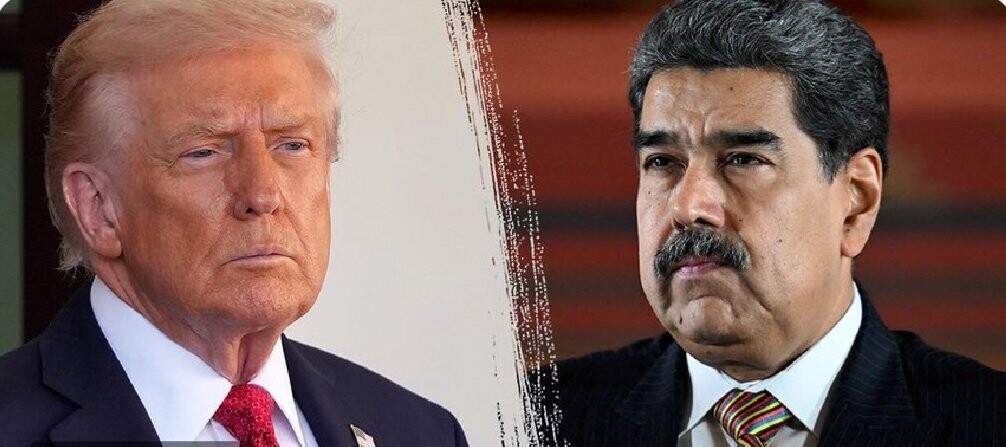
Qatar and Panama have signaled their willingness to mediate between the United States and Venezuela at a time of heightened tensions triggered by a U.S. military deployment in the Caribbean near Venezuelan waters. Caracas views this operation as an attempt to force a regime change, while U.S. President Donald Trump insists it is aimed at combating drug trafficking. A spokesperson for Qatar's Foreign Ministry, Majed al-Ansari, stated on Sunday that Doha is 'waiting' for a formal request to mediate from any of the parties. He added that Qatari authorities are 'in communication with all parties,' although Doha is 'not doing anything officially yet.' He recalled that Qatar has facilitated conversations between Venezuela and the United States in recent years to negotiate prisoner exchanges, and stressed that Doha remains 'committed to that process if needed.' At the Doha Forum, Panamanian Vice Foreign Minister Carlos Hoyos told EFE that President José Raúl Mulino has expressed willingness to 'temporarily' host 'certain people' from the Venezuelan Government to help 'resolve the situation' in the country. Amid concerns about potential U.S. action in Venezuela and Washington's reinforced military presence in the Caribbean, Hoyos said he is 'very worried that something could happen,' warning that any escalation could 'destabilize and affect everyone' in the region. Meanwhile, Venezuelan Executive Vice President Delcy Rodríguez called on oil sector workers to remain 'on high alert,' arguing that 'the enemy does not rest.' 'We are not going to betray Venezuela's sovereignty. We are going to resolve this dispute peacefully,' Rodríguez said in a video posted on her Telegram account from the Petrocedeño facility in Anzoátegui state. Rodríguez, who also serves as Minister of Hydrocarbons, urged employees of the state petrochemical company Pequiven to commit to the country's development at a time when, she said, Venezuela is 'harassed and threatened' because of its energy and natural resources. 'If there is one thing we must leave to our sons and daughters, it is the heritage of a free, independent, and sovereign country, never an energy colony of any foreign power,' she said. Since August, the U.S. has maintained a military deployment in the Caribbean, officially framed as part of its anti-narcotics efforts. This situation has forced passengers in Venezuela to make lengthy overland journeys and multiple domestic flights to reach border regions before crossing into Colombia to access international connections. The country is also facing an air connectivity crisis after the U.S. Federal Aviation Administration (FAA) issued a Nov. 21 advisory urging aircraft to 'exercise extreme caution' when flying over Venezuela and the southern Caribbean due to 'potentially hazardous' conditions. Venezuela, however, sees the operation as an attempt to engineer a regime change and install 'puppet governments' that would grant Washington favorable access to its energy resources. 'This is the time for brave men and women.'