Despite initial military successes, the transition will face three threats:
Internal security: armed cells and state-sponsored bands could pivot to purely criminal economies, destabilizing cities and borders.
Humanitarian crisis: new flows of displaced persons will require safe corridors and coordinated assistance.
Institutional capture: without judicial purges and controls over security forces, old authoritarian reflexes could be recycled under new banners.
What could happen in the next 72 hours
A clear political signal from the opposition leadership: an emergency cabinet, a 100-day plan, and guarantees of no selective vengeance, yes to justice due process.
A hemispheric agreement for a “stabilization package” (humanitarian aid, fuel, health, and electricity) tied to verifiable transition milestones.
Multilevel security: protection of critical infrastructure, ports, and airports; and protocols for the disarmament and reintegration of mid-level cadres without blood crimes.
Monetary shield: technical assistance to anchor expectations and prevent hyperinflation from the rupture of state payment chains.
The clock is ticking against the regime
All signs indicate that the hours of the Venezuelan narco-regime are coming to an end.
That exodus, already being discussed in diplomatic circles, would create cracks in the chain of command and precipitate desertions where they hurt the most: logistics, intelligence, and finance.
The transition window: the Edmundo González factor
If international pressure accelerates the regime's implosion and the flight of its most compromised cadres is confirmed, a political window opens for the elected government of Edmundo González to assume the presidency with legitimacy and external backing.
If the opposition embodies a transition with authority, a program, and guarantees, González's arrival at Miraflores will cease to be a hypothesis and become a political fact.
By Daniel Romero
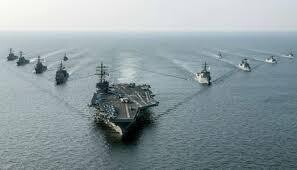
BUENOS AIRES, October 31, 2025 - Total News Agency - TNA - U.S. movements in the Caribbean — an aircraft carrier in the zone, guided-missile destroyers, and fifth-generation aircraft with precision strike capability — are not a routine show of force: they configure the operational threshold for a campaign that, once activated, will dismantle critical nodes of the chavist military and logistical apparatus linked to narcotics trafficking.
Timing will be decisive: each day that passes without effective authority worsens the institutional vacuum and the risk of fragmented violence.
Immediate risks that should not be underestimated
There are no clean endings.
Then Trump will continue to advance on the drug trade in the region.
The opportunity is unprecedented: a de facto power in retreat, an opposition with a popular mandate, and a regional framework willing to recognize the handover.
In that scenario, the regime's territorial control could erode in hours, or perhaps days, not in weeks.
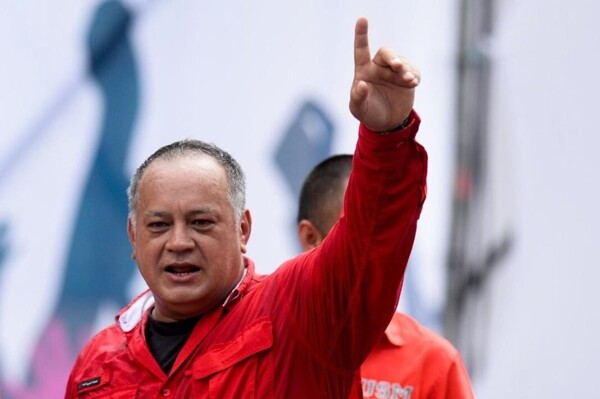
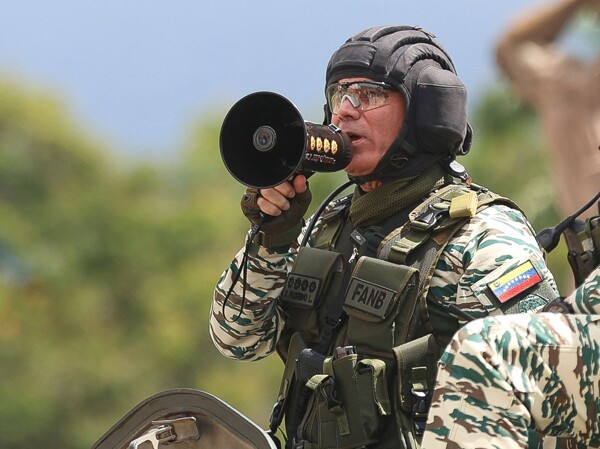
The chavist leadership understands the message: with its sights set on the “Cartel of the Suns” and multi-million dollar rewards on key figures, the margin for maneuver is reduced to two options: submit or flee.
The maritime phase against fast boats has already shown its scope; the leap to land targets, when it occurs, will aim at command centers, warehouses, clandestine airstrips, and communications.
The combination of focused military pressure, international judicial incentives, and internal desertions pushes the residual chavism toward flight.
The disorderly exit of hierarchies — military and civilian — is a probable outcome in the face of selective reprisals and the loss of international protection.
History rarely offers such narrow and decisive windows: seizing it or losing it will mark a generation.