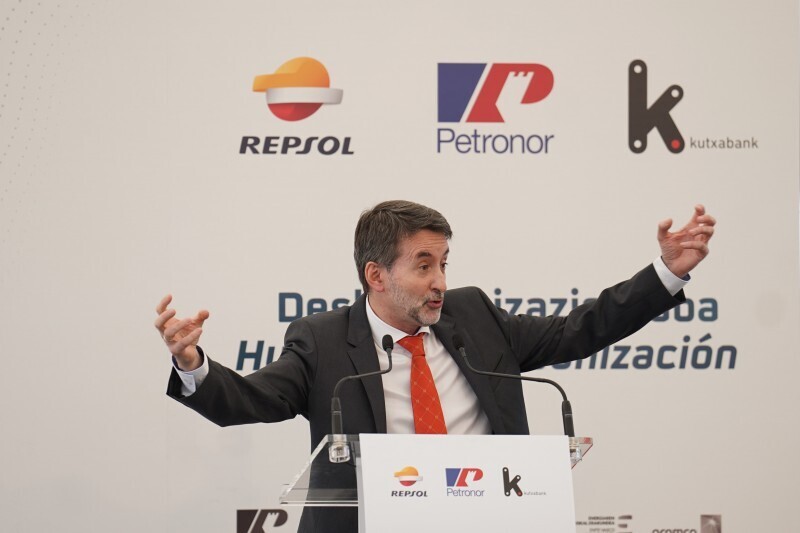
While the Mexican government has had open conflicts with Spanish private companies and is struggling to attract foreign firms, Venezuela is emerging as a new opportunity for major oil companies, such as Repsol, which is ready to increase its presence in the country. The Madrid-based company yesterday requested to recover its license to operate with the Venezuelan state-owned company PDVSA, almost a week after a meeting at the White House with President Trump, at which the company committed to triple oil extraction in the country. Repsol's decision to increase its stake in Venezuela has the backing of institutional shareholders like Black Rock, pushing the company in that direction due to the key role the Spanish company already plays in the region. This also contrasts with the caution shown by U.S. firms, except for Chevron, which are still not entirely convinced about returning to their businesses in Venezuela amidst the Venezuelan government's massive debts, an uncertain political environment, and low oil prices. Skepticism is growing in the U.S. about the viability of Trump's oil plans in Venezuela. Repsol and ENI were the only European oil companies that resisted the energy policy changes under former President Hugo Chávez and subsequent U.S. sanctions, maintaining production at La Perla, one of the world's largest gas fields. The Spanish company also has projects with PDVSA for crude extraction in the Orinoco Belt, in addition to the joint venture between the two firms, Petroquiriquire. In its estimation, supply disruptions due to geopolitical tensions would push the price of a barrel to 75 dollars. Chevron learned of Maduro's capture before Congress. With these negotiations, the Spanish company is increasing its distance from Mexico, where the government is battling to attract foreign firms and boost the oil production of Pemex, which promises to reach two million barrels per day. However, doubts about the new legal and regulatory framework, as well as the leading role maintained by Pemex, which is still mired in a multi-million dollar debt with suppliers, keeps the appetite among oil companies low. In December, it was revealed that only a handful of smaller firms had signed part of the 21 mixed contracts touted by the government. This may be the thorniest issue for future investments. According to company data, Repsol was receiving oil from Venezuela as payment for that debt until March, on one hand, and in-kind for the activity it performs there. However, these transactions were interrupted by Trump's sanctions, which revoked the licenses of foreign companies in the Bolivarian country. For some analysts, this point should dampen the enthusiasm of its CEO, Josu Jon Imaz, who before Trump declared: 'We are ready to invest more in Venezuela and triple production there.' For example, Citi warned in December that a continued escalation in tensions with the U.S. 'could put Venezuela's oil exports and shipments at risk, which would provide a short-term bullish boost for oil.' Everything will depend on whether it obtains the license. Another factor considered is the outlook for oil prices. While current general projections point to prices remaining below 60 dollars per barrel, some analysts do not rule out a bullish scenario either. Both projects have been a source of problems for Repsol, as a significant debt has been generated that the Venezuelan government committed to pay for with barrels of oil.