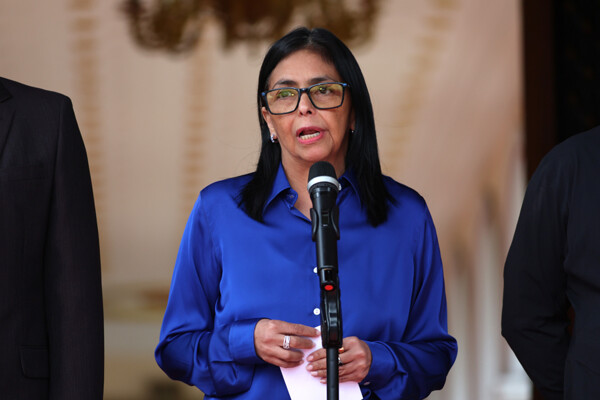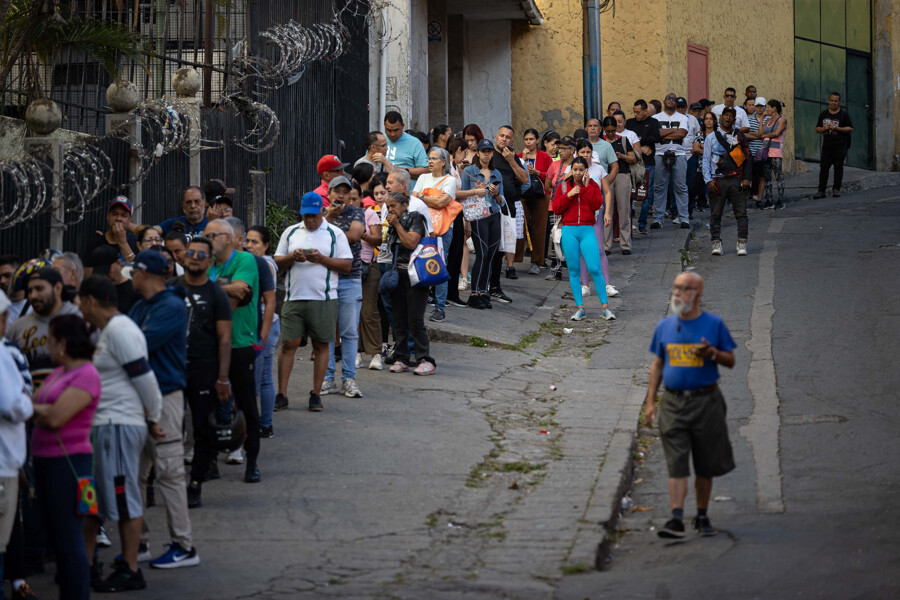
Caracas woke up on Sunday with empty streets and long lines at supermarkets following the capture of Maduro. On a day of strange calm and scarce police presence, few shops were open, mostly supermarkets and pharmacies. The establishments, however, restricted entry to people in small groups to avoid crowds, as happened on Saturday, forcing shoppers to line up to access businesses. In western Caracas, where the Miraflores Palace - the executive headquarters - and the main government institutions are located, there was little circulation of people. In this area, where some explosions occurred during the entry of US aircraft, armed civilians known as 'colectivos', carrying long weapons and with their faces covered, were guarding the streets and even some private commercial establishments. Meanwhile, in the east of the city, there was also little circulation of people and almost no police presence. This area is home to the Francisco de Miranda Air Base, also known as La Carlota, which was one of the targets of Saturday's attack. For this Sunday, chavismo has called on its supporters to a 'great march' that will travel through some avenues of the Caracas center, in rejection of the detention and subsequent transfer to the United States of Maduro and Flores, whom they demand be returned. Venezuela remains expectant of the next events after the Constitutional Chamber of the Supreme Court of Justice (TSJ) ordered on Saturday night that the executive vice president, Delcy Rodríguez, assume as acting president of the country. Earlier on Saturday, Rodríguez, also Minister of Hydrocarbons, headed a meeting of the National Defense Council with ministers and military heads, in which she informed that she would send to the TSJ a decree of external commotion that grants 'special powers' to the presidency. Among these powers, for example, mobilizing the Bolivarian National Armed Forces (FANB) throughout the territory, militarily and immediately taking over the infrastructure of public services, as well as the oil industry and basic companies, to guarantee their 'full operation', and to activate 'all citizen security plans'. After the arrest of Maduro, the President of the United States, Donald Trump, assured this Saturday that his Administration 'is going to govern' the South American country and that the leadership of a transition process will be his security team, present at his press conference, including the Secretary of State, Marco Rubio, who, according to him, spoke with the Venezuelan vice president to initiate the political process. Maduro, for his part, spent his first night in the federal Metropolitan Detention Center in Brooklyn, New York, a federal detention center to which he arrived surrounded by a strong security device, which first accompanied him to a federal facility linked to the US Drug Enforcement Agency, where he was processed. The Venezuelan president, formally accused in 2020 by the Southern District of New York Prosecutor's Office, which this Saturday made public a substitute indictment in the same court, will face federal charges for narcoterrorism, conspiracy to import cocaine to the United States, and crimes related to automatic weapons.