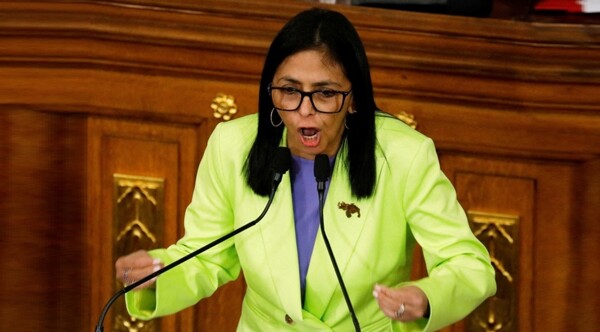
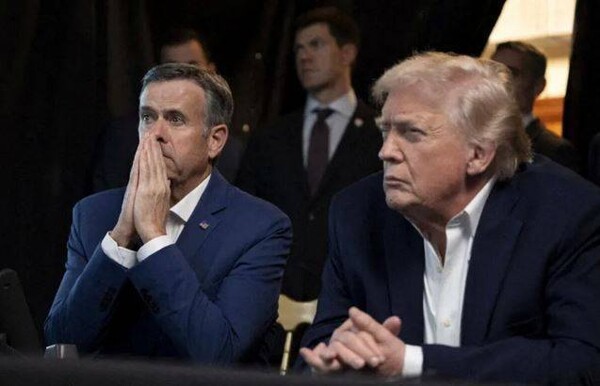
The swearing-in of Delcy Rodríguez before the National Assembly as the interim president of Venezuela took place in a sensitive atmosphere, which is no secret to anyone. What did her posture convey? A posture that communicated little authority and energy. According to Llerena, Rodríguez's body language upon arriving at the event was: a lowered gaze, tense and dropped shoulders, a slightly hunched back, and an insecure gait. What do they say about Venezuela's interim president? This type of posture, says Llerena, can convey emotional containment, caution, or weak stage presence, especially at events where openness, firmness, and authority are expected. The 56-year-old lawyer, dressed in a green suit, said: “I come as the executive vice president of the constitutional president of the Bolivarian Republic of Venezuela, Nicolás Maduro Moros, to take the oath.” But beyond the swearing-in ceremony itself, Rodríguez also captured the analysis of some body language experts. “The lack of expressions of enthusiasm or closeness can be perceived as an emotional disconnection from the historical significance of being the first woman to lead,” she noted. Llerena points out that in a leadership context, a firm tone and vocal stability are key to conveying authority, control, and security. “She doesn't seem celebratory or triumphant,” she indicated on the day of the ceremony. This generated a mixed emotional language: sometimes warm and sometimes distant. Meanwhile, Dominican protocol specialist Rocío Regalado indicated that Rodríguez showed a sober body language, which indicates caution rather than presidential euphoria. “Her posture and gestures are sober, more of containment than celebration,” she added. The analysis of the interim president of Venezuela's body language was also provided by Ecuadorian political scientist and image consultant Eve Llerena. Llerena pointed out several points in this regard on her social networks. The swearing-in, led by deputy Jorge Rodríguez, the president's brother and head of the chamber, took place after the capture of Nicolás Maduro in a U.S. military operation on January 3. Rodríguez has been a key figure in chavism for over two decades. Meanwhile, while seated, she maintained a closed posture: hands interlaced in front; she did not sit exactly in the center of the chair; and her hands looked contracted. Regarding the paralinguistics during her speech, her voice was perceived as lower and shakier than usual, with less projection and stage presence. Her smile was inconsistent, something common in high-pressure situations.

Analysis of Venezuela's Interim President's Body Language
Analysis of Venezuelan interim president Delcy Rodríguez's body language during her inauguration revealed a restrained posture, which experts interpreted as caution rather than triumph. Her gestures and tone of voice elicited mixed emotional reactions.