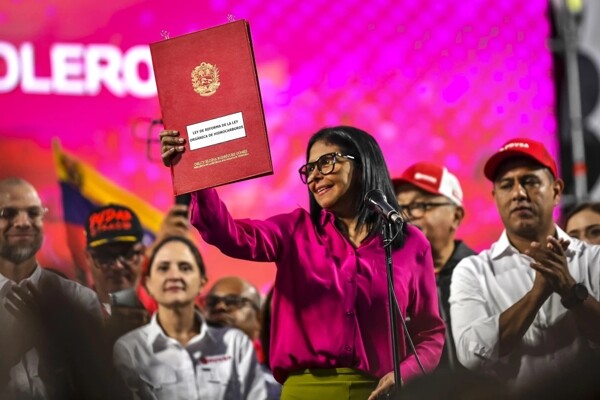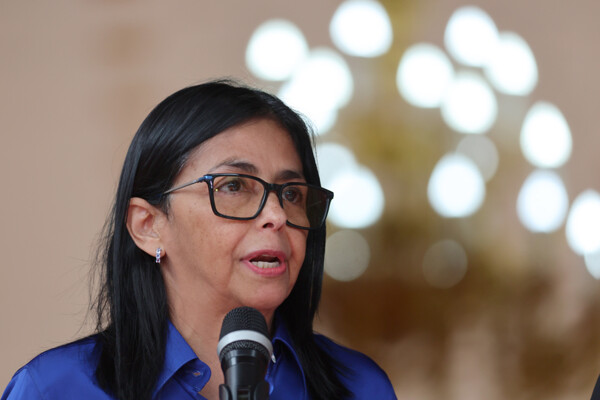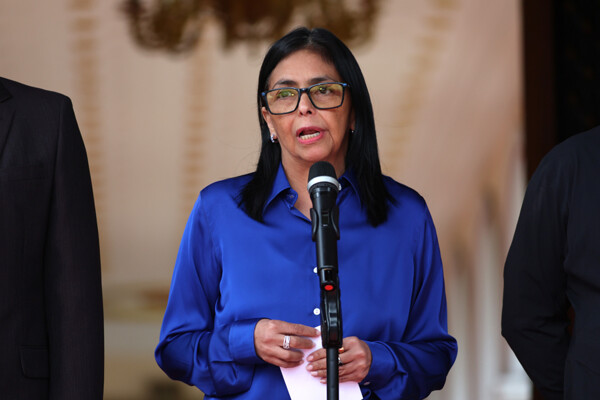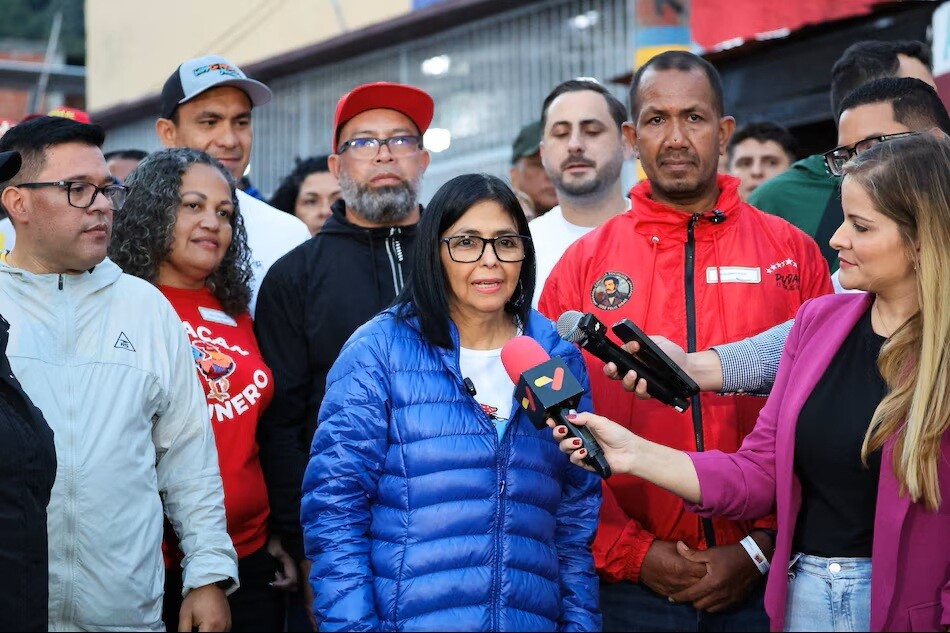
Venezuela has received $300 million from oil sales, while Panama expects to confirm the release of a Panamanian detained in the country. Venezuelan opposition leader and 2025 Nobel Peace Prize laureate María Corina Machado warned on Wednesday that she has received information in recent hours about 'direct' and 'systematic' threats of 'extrajudicial execution' against political prisoners held in El Rodeo prison, located in Miranda state (north, near Caracas). These accusations come amid growing tension over the air and naval presence ordered by Donald Trump in the Caribbean and the Eastern Pacific, where he has attacked more than 30 boats allegedly linked to drug trafficking, a deployment that the Nicolás Maduro government considers a 'threat' of invasion and an attempt to bring about a regime change. In her X account, Machado asserted that these threats are 'issued by officials of the regime’s repressive organs and constitute crimes against humanity, serious violations of international humanitarian law and an imminent risk to the lives of people who are currently being held hostage by the State.' 'These are direct, repeated acts of intimidation directed at completely defenseless people, deprived of their liberty and under state custody,' said the former congresswoman, who held the Venezuelan government responsible for 'any physical and psychological harm that may occur as a result of these threats.' The opposition leader demanded 'immediate action' from international human rights organizations, 'including,' she said, 'protection and verification mechanisms to prevent extrajudicial executions.' She also urged 'democratic and allied governments,' without mentioning any, 'to activate urgent measures of diplomatic pressure, international monitoring and formal warnings to deter the regime from carrying out these threats.' 'We demand immediate protection for political prisoners, access to independent observers, and effective guarantees of life and personal integrity.' As she explained last week, the acting president reiterated that these revenues from the sale of crude oil will be 'used and employed' through the foreign exchange market, in the national banking system and through the Central Bank of Venezuela (BCV), 'to consolidate and stabilize the market,' she added. This week, the NGO Venezuelan Prison Observatory (OVP) reported that, according to testimonies from relatives and political prisoners, the guards at El Rodeo I have threatened detainees with using them as 'human shields' in the event of 'a possible US intervention in Venezuela.' 'It is important to emphasize that the systematic use of fear and intimidation as control mechanisms deepens the real risk to the physical and mental integrity of people deprived of their liberty,' the NGO pointed out. Rodríguez assumed the Executive branch after the United States attacks in Caracas and three other states that ended with the capture of Venezuelan President Nicolás Maduro and his wife, Deputy Cilia Flores, who remain imprisoned in New York. The legal currency of Venezuela is the bolivar, but the US dollar – and sometimes the euro – are used as a reference for setting prices of goods and services. The official exchange rate is set by the Central Bank of Venezuela (BCV). 'Of the first 500 million, 300 million have been received,' Rodríguez stated during a visit to a commune base in Caracas, in an event broadcast by the state channel Venezolana de Televisión (VTV). According to him, these revenues will be used to 'cover and finance' workers’ income, as well as 'protect it from inflation' and the 'negative impact of fluctuations in the foreign exchange market.' 'Lives are at risk today,' Machado warned. However, a parallel market exists with a higher rate, creating a gap between exchange rates, so products can have different prices depending on the currency used for purchase.